Physical Property Testing
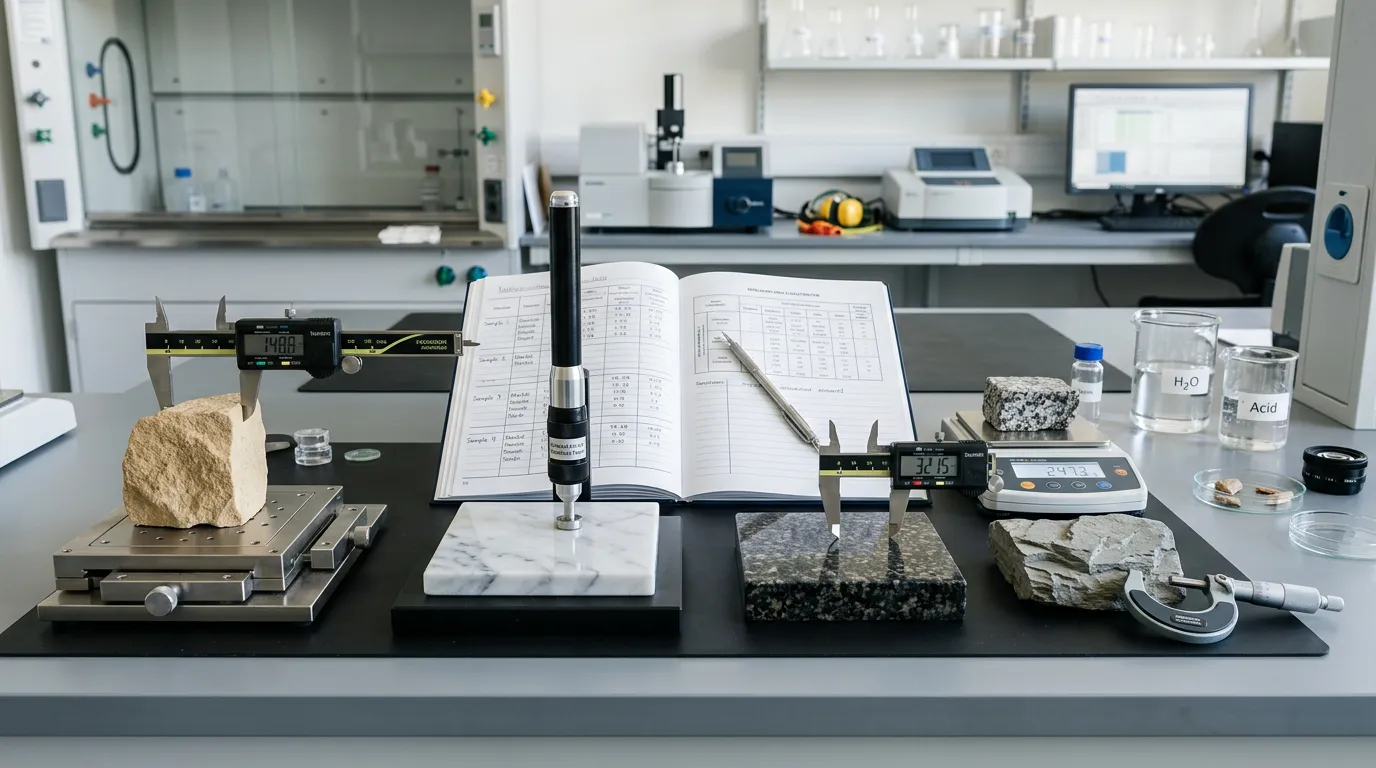
Professional stone assessment begins with physical property testing. Water absorption rates (measured as percentage of water weight to dry weight) indicate durability: less than 0.5% is excellent for high-wear or wet applications; 0.5–1% is acceptable for protected interiors; above 1% requires careful application and sealing. Compressive strength (measured in PSI) confirms load-bearing capacity—higher values mean the stone tolerates weight and impact better. Flexural strength measures resistance to bending and breaking; important for countertops, shelves, and exposed edges. These tests are standardized across international stone suppliers and are often required for commercial specifications.
Color Consistency and Veining
Natural stone varies within quarries—no two blocks are identical. Quality control begins with careful quarry selection: premium Egyptian suppliers isolate consistent geological zones and extract stone from narrow depth ranges to minimize color variation. Veining patterns, fossil impressions, and color tone are assessed visually against approved samples. Large projects (hotels, offices, commercial) often require color-sorted shipments from a single quarry block or season, ensuring visual harmony across thousands of square meters. We work with quarries to source material that matches your reference sample, managing expectations around natural variation.
Processing and Surface Quality
After quarrying, stone is split, sawn, or shaped to dimension. Quality processors follow dimensional tolerances (flatness, thickness variation, edge straightness) within ±3–5mm for most applications. Surface finish quality is inspected under bright light—no deep scratches, minimal saw marks, uniform polish or hone across the entire piece. Defect-free edges are confirmed, and any hairline fissures or internal cavities are documented. Premium processors also include edge polishing or chamfering to prevent chipping during handling and installation.
Documentation and Certification
Professional sourcing includes complete documentation: quarry certificates confirming origin, laboratory test reports (water absorption, compressive strength, etc.), processing reports detailing dimensions and finish, and origin/export certifications. This paper trail protects you legally and allows you to confidently specify Egyptian stone to your clients or building authorities. We maintain copies of all test reports and certifications and can provide them in the format required by your project specifications.